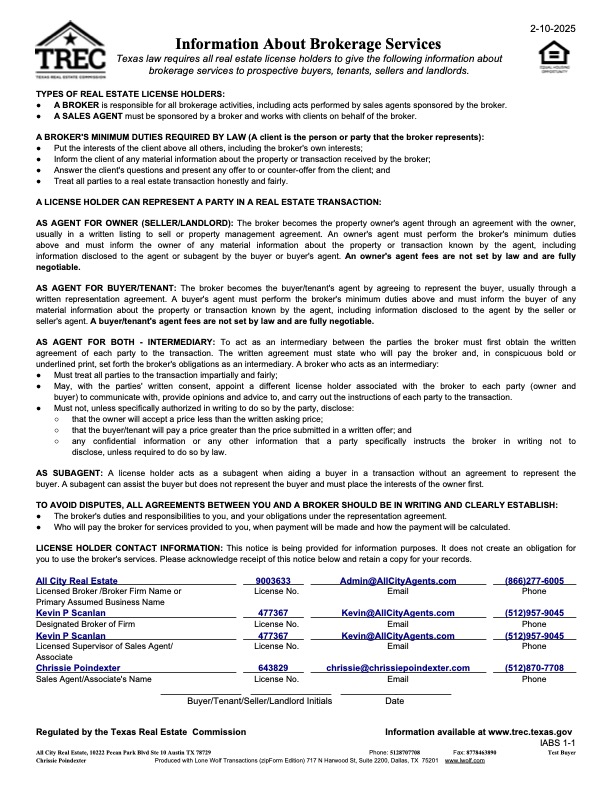
Taxes affect buying power
Higher taxes can reduce the amount of home a buyer may feel comfortable purchasing because the payment, not just the price, determines affordability.
In Central Texas, property taxes do more than influence what you pay each year. They shape your monthly mortgage payment, your buying power, your long-term holding costs, and how future buyers evaluate your home when it returns to the market.
The purchase price may get the headline, but the payment is where the real decision often happens.
Most people think of property taxes as an annual bill. In real estate, they are also a pricing, affordability, and market-positioning issue.
In a state with no personal income tax, property taxes carry meaningful weight. Across Central Texas, tax obligations are shaped by overlapping jurisdictions including counties, cities, school districts, utility districts, and special taxing entities.
That means two homes with similar prices may deliver very different monthly payments. For buyers, that difference affects affordability. For sellers, it can influence demand, buyer perception, and how aggressively a home can be positioned against competing properties.
When approached thoughtfully, property taxes stop being a surprise line item and become part of a smarter real estate strategy.
Every mortgage payment is usually built from principal, interest, taxes, and insurance. Interest rates often get the spotlight, but property taxes can quietly move the monthly payment in a very real way.
Higher taxes can reduce the amount of home a buyer may feel comfortable purchasing because the payment, not just the price, determines affordability.
A lower effective tax burden can make a property feel more attractive when buyers compare similar homes across different neighborhoods or taxing jurisdictions.
Incremental increases may feel manageable at first, but over several years they can affect holding costs, future resale conversations, and overall homeowner flexibility.
Here is a simplified illustration using two homes with the same purchase price but different property tax rates.
| Scenario | Estimated Home Value | Estimated Tax Rate | Estimated Annual Taxes | Estimated Monthly Tax Portion |
|---|---|---|---|---|
| Home A | $500,000 | 2.2% | $11,000 | About $917/month |
| Home B | $500,000 | 2.8% | $14,000 | About $1,167/month |
In this simplified example, the difference is approximately $250 per month, or about $3,000 per year. That does not mean one home is automatically better than the other, but it does mean the tax profile deserves attention before a buyer chooses a neighborhood, compares homes, or determines what feels comfortable long term.
For sellers, this also matters because buyers often compare homes through the lens of total monthly cost. A home with a higher tax burden may need stronger justification through location, condition, features, schools, lifestyle appeal, or overall value.
Property taxes influence a home’s perceived value because they affect the cost of ownership. When buyers compare two similar properties, they are not simply comparing bedrooms, finishes, square footage, and location. They are comparing the total financial commitment.
A home in a lower-tax area may feel more attainable at the same purchase price. A home in a higher-tax area may still be desirable, but the value story needs to be clear. Buyers want to understand why the payment is justified.
For sellers, this is where pricing strategy becomes especially important. The right list price is not determined by square footage alone. It should account for condition, location, recent comparable sales, buyer demand, and the practical cost of ownership.
Property taxes rarely feel dramatic in one single moment. The impact is usually cumulative, showing up gradually through appraisal changes, exemption status, local tax rates, and shifting property values.
A modest increase in assessed value may not feel alarming in isolation. But repeated year after year, it can change the monthly escrow payment, raise the annual cost of ownership, and influence a homeowner’s long-term financial planning.
For buyers, this is why it is important to look beyond today’s payment and understand what may happen after ownership transfers, especially if the previous owner had exemptions or long-term tax limitations in place. For sellers, it is important to understand that buyers may ask questions about taxes, exemptions, and projected payments before feeling ready to make a confident offer.
The more clarity you have, the better you can plan. Real estate decisions become stronger when the numbers are not treated as an afterthought.
These misconceptions can lead buyers and sellers to make assumptions that affect budgeting, pricing, negotiation, and long-term planning.
Not always. A current tax bill may reflect the present owner’s exemptions, assessed value history, or tax limitations. After a sale, the buyer’s future tax picture may look different.
They may have very different monthly payments depending on tax rate, insurance, HOA dues, special assessments, and other ownership costs.
Sometimes early tax estimates are based on land value or incomplete assessment data. Buyers should understand how the completed home may be taxed going forward.
Not necessarily. A higher-tax area may offer amenities, schools, infrastructure, or location advantages that matter. The question is whether the value supports the payment.
Sellers should pay attention too. Buyers evaluate total cost, and that perception can affect showing activity, offer strength, and negotiation dynamics.
Many exemptions require action from the homeowner. A missed exemption can affect annual taxes, escrow estimates, and long-term planning.
Property taxes in Central Texas can vary significantly between Travis, Williamson, Hays, and surrounding counties. They can also shift by city boundary, school district, utility district, and neighborhood-specific taxing structure.
Tax structures can vary across county lines, which is especially relevant in areas where buyers compare homes in Austin, Cedar Park, Leander, Round Rock, Georgetown, Dripping Springs, Kyle, and nearby communities.
School district taxes are often a major portion of the overall tax bill. Buyers may weigh this alongside schools, commute, neighborhood feel, and long-term resale potential.
Some neighborhoods include municipal utility districts or other special taxing entities. These may support infrastructure and amenities, but they also affect the total ownership cost.
Property taxes do not need to feel intimidating. They simply need to be understood in context.
Yes. Tax rates should be part of the monthly payment conversation, especially when comparing homes across different cities, counties, school districts, or newer communities.
They can affect buyer perception and affordability, which can influence demand. A higher tax burden does not automatically reduce value, but it should be considered in pricing and positioning.
Yes. Exemptions may reduce taxable value for eligible homeowners. Buyers and owners should confirm what may apply to their situation and consult the appropriate appraisal district or tax professional for guidance.
They should understand them. Buyers are sensitive to monthly payment, so tax profile can become part of the value conversation, especially when competing homes offer a different cost structure.
Understand the decisions that shape a stronger purchase in Central Texas.
Learn how pricing, preparation, and positioning affect your final outcome.
Explore the communities, local culture, and lifestyle details that make the region worth considering.
Whether you are buying, selling, or planning ahead, property taxes should be part of the strategy from the beginning. The right guidance can help you understand the numbers, evaluate the market, and make decisions with more confidence.
Have questions about how property taxes may affect your next move in Central Texas?
All City Real Estate supports the principles of Equal Housing Opportunity and is committed to fair housing practices. Every buyer and seller deserves professional representation, transparent information, and equal access to housing opportunities.